When people hear we offer complimentary Pastoral Care to all the people we serve, their first response is sometimes: ‘Great. But, err, what is that?’
If that’s your question too, read on to find out more about how Pastoral Care helps us care for the whole person, and why it's not just for people who are ‘into spirituality’...
Have you started to feel like most of your conversations revolve around health issues?
When you’re older, those relaxed catch-ups with friends can become a chance for everyone to share their medical updates – often in more detail than you’d like!
Those physical problems themselves can be tough, but you might also have a lot of other issues weighing on your mind, like changes you’re facing, relationships that are troubled, or questions of meaning and purpose.
All of these things matter, and they all affect your quality of life.
Health practitioners are now recognising that just treating the body doesn’t always lead to wellness. In fact, they describe five aspects that can affect our overall health and wellbeing, including:
-
Physical
-
Emotional/behavioural
-
Spiritual/cultural
-
Social
-
Environmental
But many of us don’t give a lot of thought to caring for ourselves as a whole person. (In fact, some of us struggle to even visit the doctor when we’re sick, let alone seek help in other areas!) So it’s no wonder a lot of aged care providers don’t look much beyond your physical needs, either.
Every part of your life is important, not just your physical or clinical needs: that’s why we have people whose job is just to be there for you.
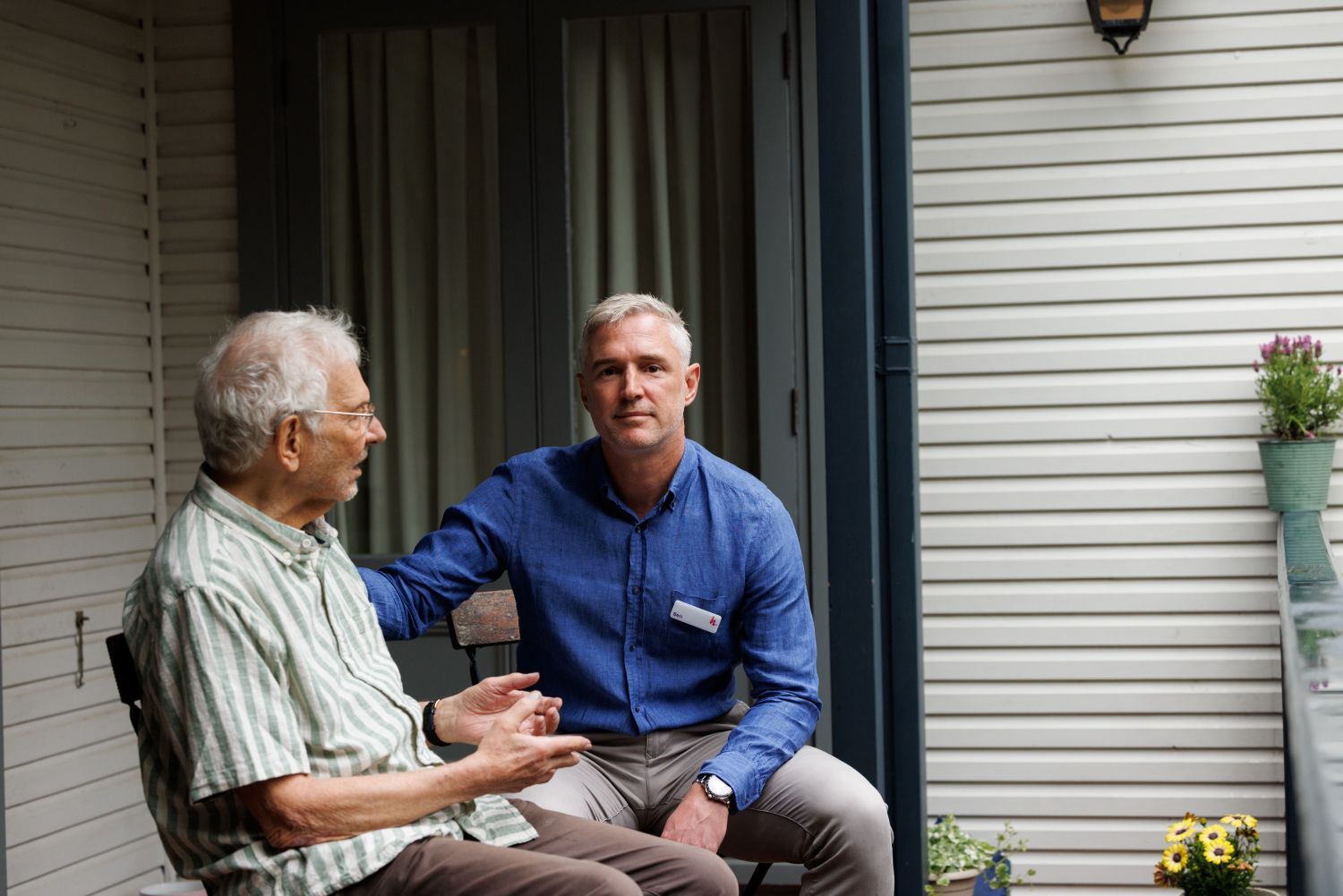
We call them our Pastoral Care team – anyone who receives support from HammondCare can talk to them at no cost, wherever they’re from and whatever they believe.
Because people are not just bodies, and sometimes we need more than help around the house or clinical support.
Our emotional, spiritual and personal issues matter, and a heart-to-heart with someone who really listens might be the difference between sickness and health.
That’s real whole-person care.
We do heart-to-heart
Want more insight into what our Pastoral Care team do? We asked team members to share what their role has meant for some of the people they serve...
Pauline was referred to Pastoral Care when her husband of 60 plus years was diagnosed with a terminal illness and given only weeks to live. Following his death and funeral I went to visit Pauline, taking a small bouquet of home-grown flowers, a sympathy card and a brochure about grief. I expected the visit to be about David’s death and her grief, but I soon discovered that Pauline’s loss and grief ran much deeper. She told me how she was losing her eyesight and only the day before, her doctor had taken her license from her. Now her family were considering whether she could even remain in the family home. Pauline was experiencing grief upon grief. I sat and listened as she poured out her heart through her tears. That is what Pastoral Care Coordinators do.
- Janelle Walker, Pastoral Care Coordinator
During a visit with a client recently, I noticed that she had a bunch of old reading glass cases on her dresser. When I asked her about them, she showed me the treasure inside. They were all filled with jewellery that she had collected over her life. Many of them were from her travels and as she looked at them, she reminisced about all the places she had been and the things she had seen. I encouraged her to try some of them on. After an initial protest saying she was too old, she put on a beautiful necklace and told me the story behind it. While she was talking, I pointed to her reflection in the mirror. She caught her breath as she looked with tears in her eyes and said, ‘I just saw myself at 30. Thank you.’ You never know where a pastoral care visit might take you.
- Sal Linde, Pastoral Care Coordinator
Having a background in pastoral counselling allows me to listen deeply and reflect back a person’s emotions, which helps them feel heard and validated. Someone I supported recently said I didn't preach or give her a sermon, I just listened and validated and reflected her feelings. She said she found it really helpful and she felt heard and seen. This is spiritual care. It addresses what is most important to a person in their non-physical self – those questions of hope, meaning, identity and belonging, and often it's expressed in things such as stress, anxiety, burnout, loss and grief. Everybody needs spiritual care, whether it be from a pastoral carer or from others in our lives. Spiritual care is for everyone.
- Mel Campion, Pastoral Care Coordinator



 Author: HammondCare
 Read time: 3 min. read


 Pastoral Care