

Resource details
-
 Author: HammondCare
-
 Read time: 2 min. read
Share


%20Alicia%20Sammut%2c%20Chizuru%20Sammut%2c%20Mayu%20Kataoka%2c%20Marcus%20Sammut%20and%20Steve%20Sammut%20edit.jpg) Palliative Care
Palliative Care
-
Author: HammondCare
-
Read time: 2 min. read
A slow, sensory walk through the Australian bush — inspired by the Japanese practice of shinrin-yoku, or forest bathing — has the potential to ease stress and bring comfort to patients with life-limiting illnesses, says accredited forest therapy guide Mayu Kataoka.
On all her forest bathing walks, Mayu invites participants to slow down and notice the colours, scents, sounds and textures around them. The experience is not about distance or exertion, but about being present — feeling the bark of a tree, listening to birdsong, breathing in the forest air or noticing the ground beneath their feet.
Drawing on Japanese nature wisdom, Mayu said shinrin-yoku reminds people that they are not separate from the natural world, but part of it.
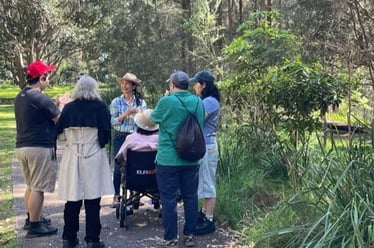
Mayu, 60, trialled the experience with fellow Japanese Sydneysider Chizuru Sammut, who is living with metastatic cancer in the liver, at Lane Cove National Park on Sunday, September 13, as part of HammondCare’s Dreams Program.
It was the first shinrin-yoku experience offered through the Dreams Program, which is funded by the HammondCare Foundation and has helped hundreds of palliative care patients over 15 years fulfil an important wish or dream, often shared with family.
The term shinrin-yoku was coined in Japan in 1982 to describe the practice of immersing oneself in a forest atmosphere through the senses.
HammondCare Dreams Program Lead Antoine Casgrain said offering a shinrin-yoku experience was a first for the program and carried clear therapeutic benefits.
“For Chizuru, this dream honours her cultural background and her personal connection with nature,” Antoine said. “She knew about Mayu and the Japanese practice of forest bathing, and was keen to experience it herself with her family.”
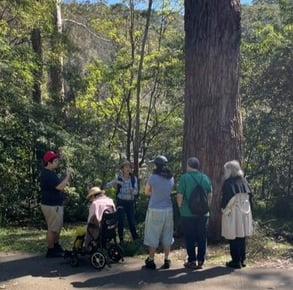
Mayu has been leading groups through short shinrin-yoku experiences in places such as Lane Cove National Park, Cumberland State Forest and Blue Mountains National Park for five years. She also leads a Japan Forest Bathing Retreat once a year, for ten days.
It was the first time Mayu has guided someone receiving palliative care through a forest bathing experience
“Shinrin-yoku can bring peacefulness to the mind and help people put aside concerns about the cycle of life. The beginning becomes the end, and the end becomes the beginning,” Mayu said. “Being in nature can clear the mind of anxiety, worries and fears.”
Chizuru, 59, of Carlingford, knows of shinrin-yoku from her Japanese upbringing and was keen to experience it in Australia. Due to her health circumstance, she did the forest walk, which ended in a tea ceremony, in her wheelchair.
“I felt so relaxed at the end I wanted to do it all again,” Chizuru said, noting it helped elevate her energy levels.“The nice gentle sunlight between the branches, the sounds of the river, touching the trees. The wonderful smells when Mayu crushed the leaves. It was all so wonderful.”
Chizuru went through Mayu’s forest bathing experience with husband Steve and their two children Marcus, 27 and Alicia, 25.
Mayu asked everyone to switch their phones and other devices to silent mode so as not to be distracted by 21st Century gadgets. “The kids only used their phones for pictures – it was nice,” Chizuru said.
.jpg?width=460&height=575&name=Chizuru%20Sammut%20with%20Mayu%20Kataoka%20in%20Lane%20Cove%20National%20Park%20(tighter).jpg)
Related
Resource details
-
Author: HammondCare
-
Read time: 2 min. read